
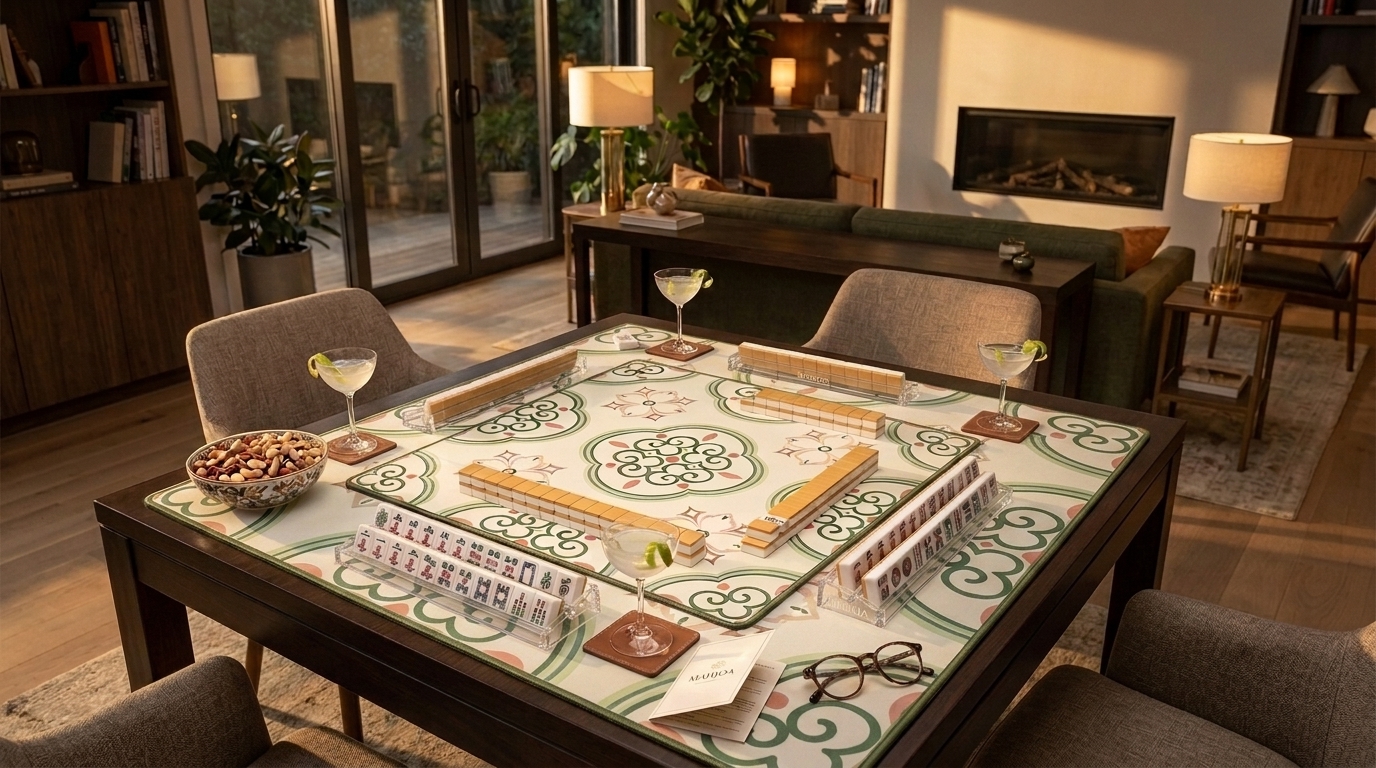
There is a unique magic that happens when 144 tiles meet a tabletop. The crisp, rhythmic clack-clack of mixing the wall, the tactical silence of a mid-game decision, and the sudden burst of laughter when someone reveals a winning hand.
Today, Mahjong is a global language of connection—a staple of cozy living room game nights, vibrant weekend brunches, and sunny poolside afternoons. But before it became the ultimate centerpiece for modern social celebrations, this beautiful game traveled through centuries of history, evolving from an exclusive imperial pastime into a global cultural phenomenon.
Here is the story of how a handful of engraved tiles captured the heart of the world.
The Whispers of Origin: From Imperial Courts to the Streets of Shanghai
The true origin of Mahjong is beautifully shrouded in myth. For decades, folklore credited the legendary philosopher Confucius with inventing the game around 500 BC, suggesting the three "Dragon" tiles represented his core virtues: benevolence, sincerity, and filial piety.
However, historical reality points to a more recent, organic evolution. Modern Mahjong as we know it likely crystallized in the mid-to-late 19th century in the Yangtze River Delta region of China, particularly around Ningbo and Shanghai.
It was born from a blend of ancient Chinese card and domino games. Early artisans took the mechanics of traditional leaf-money suits and meticulously carved them onto small, tactile blocks of bone and bamboo. The game was originally called 麻雀 (pronounced Máqiù in local dialects), which literally translates to "Sparrow." The name was a poetic nod to the lively, chattering sound the tiles made when shuffled together—a sound that resembled a flock of sparrows taking flight.
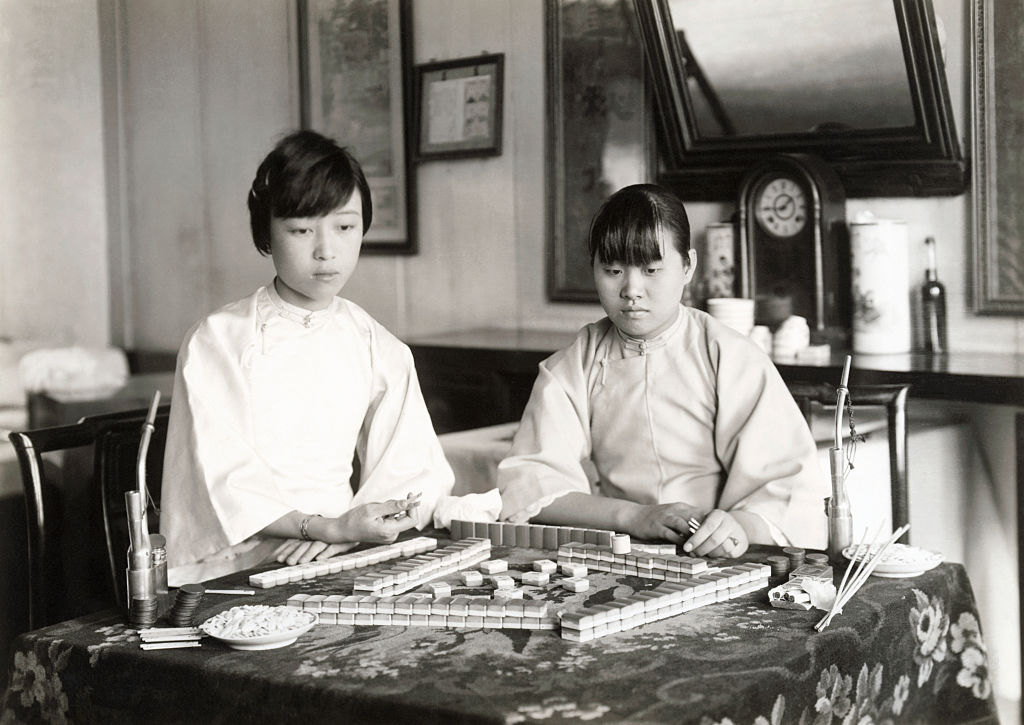
Photo by Bettmann on gettyimages.com
At first, Mahjong was an elite obsession, played in private courtyards by scholars and aristocrats. But as Shanghai transformed into a bustling international trading hub, the game spilled out into teahouses and clubs, quickly becoming the heartbeat of the city’s social scene.
Crossing the Ocean: The 1920s Mahjong Craze in the West
Mahjong didn’t stay a local secret for long. In the early 1920s, an American travel representative named Joseph Babcock, who had fallen in love with the game while living in China, decided to introduce it to the West. He imported the first sets to the United States, translated the complex rules into a simplified version for English speakers, and trademarked the phonetic name we use today: Mah-Jongg.
What followed was nothing short of a cultural wildfire.
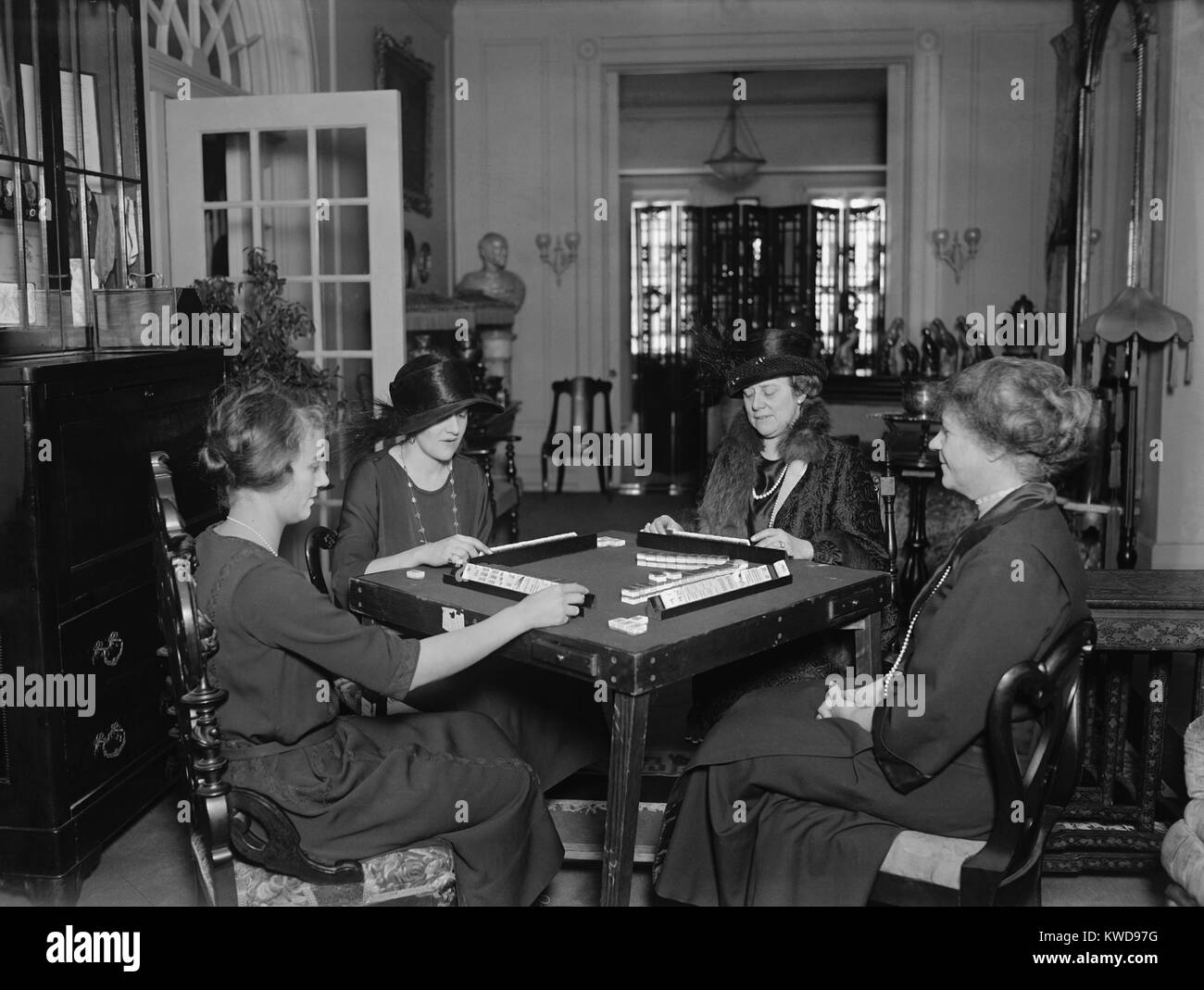
Photo by Alamy
By 1923, Mahjong had become the biggest fad in America. Society elites threw elaborate Mahjong-themed parties, dressing in silk robes, serving Chinese-inspired delicacies, and painting their nails to match the tiles. Everyone from Hollywood starlets to college students was hooked. Demand was so immense that factories in China couldn't carve the bone-and-bamboo sets fast enough to keep up with Western exports.
The Evolution of the American Game
As Mahjong rooted itself in Western culture, it began to evolve to fit its new communities. The most significant transformation came in 1937, when a group of avid players in New York City formed the National Mah Jongg League (NMJL).
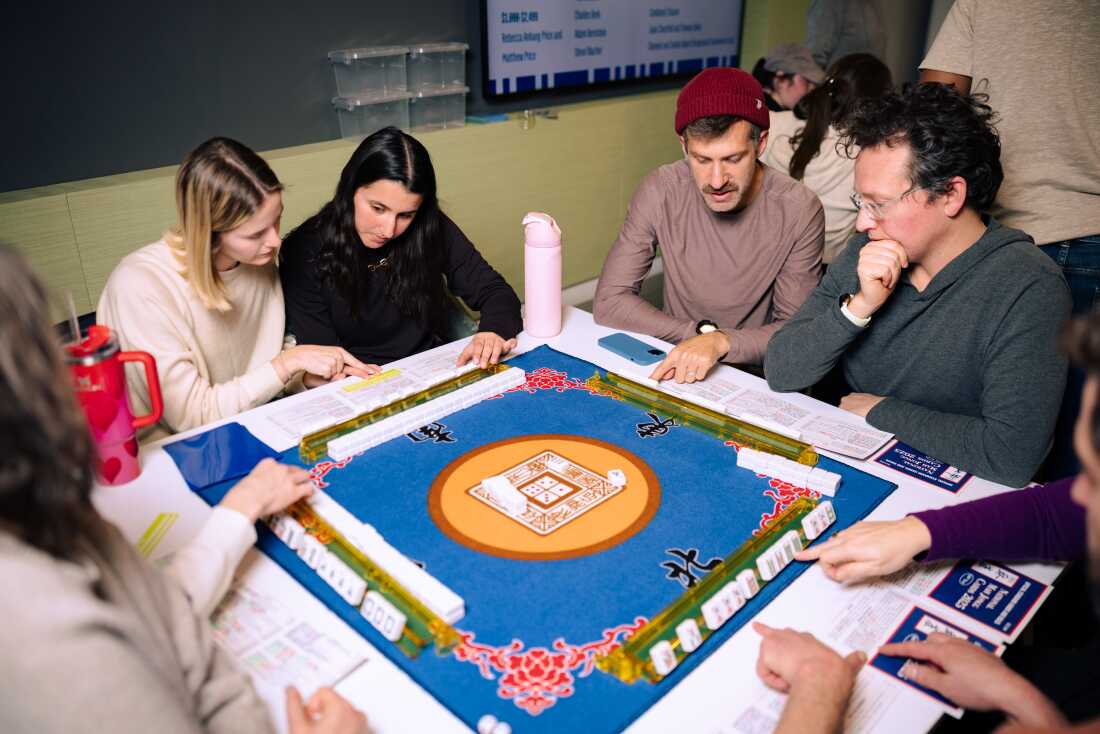
Photo by Maansi Srivastava for NPR
To bring standardization and a fresh challenge to the game, they introduced a unique twist: a changing annual card of eligible card combinations and the addition of Joker tiles to allow for wild, unpredictable gameplay. This specific variant—American Mahjong—became deeply woven into the social fabric of mid-century communities, passed down lovingly from grandmothers to mothers and daughters as a cherished weekly ritual.
Reimagining the Table for the Modern Player
Games survive because they adapt, and Mahjong is experiencing a beautiful, vibrant renaissance. Today’s players are honoring the rich, historical mechanics of the game while completely redefining its aesthetic.
The traditional bone-and-bamboo sets of the past have opened the door to a new era of design. Modern creators are infusing the tabletop with fashion-forward sensibilities—replacing standard designs with ethereal pearl-textured tiles, clear acrylic accessories, and whimsical, botanical-printed mats. It is no longer just a game hidden away in a closet; it is a statement piece of home decor, a reflection of personal style, and a brilliant catalyst for bringing people together.
Whether you are playing a traditional hand or a fast-paced American variant, when you sit down at a Mahjong table, you are stepping into a rich, global lineage of play. You are part of a story that spans imperial China, roaring twenties salons, and modern living rooms.
So, gather your favorite people, pour a fresh drink, and let the tiles tell their story. Let's play.
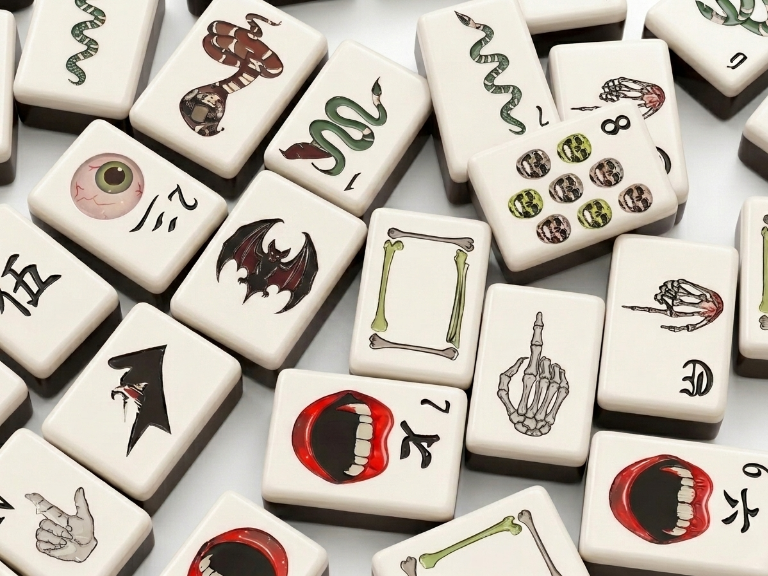
![[Copy]Halloween-Themed Mahjong](https://img-va.myshopline.com/image/store/1782208655536/-(2).png?w=576&h=576)
![[Copy]Halloween-Themed Mahjong](https://img-va.myshopline.com/image/store/1782208655536/-(1).png?w=1025&h=576)
.png?w=1025&h=576)
.png?w=1025&h=576)
.png?w=1025&h=576)
.png?w=1025&h=576)
.png?w=1025&h=576)
.png?w=576&h=576)
.png?w=576&h=576)
.png?w=1025&h=576)
.png?w=576&h=576)
.png?w=576&h=576)